
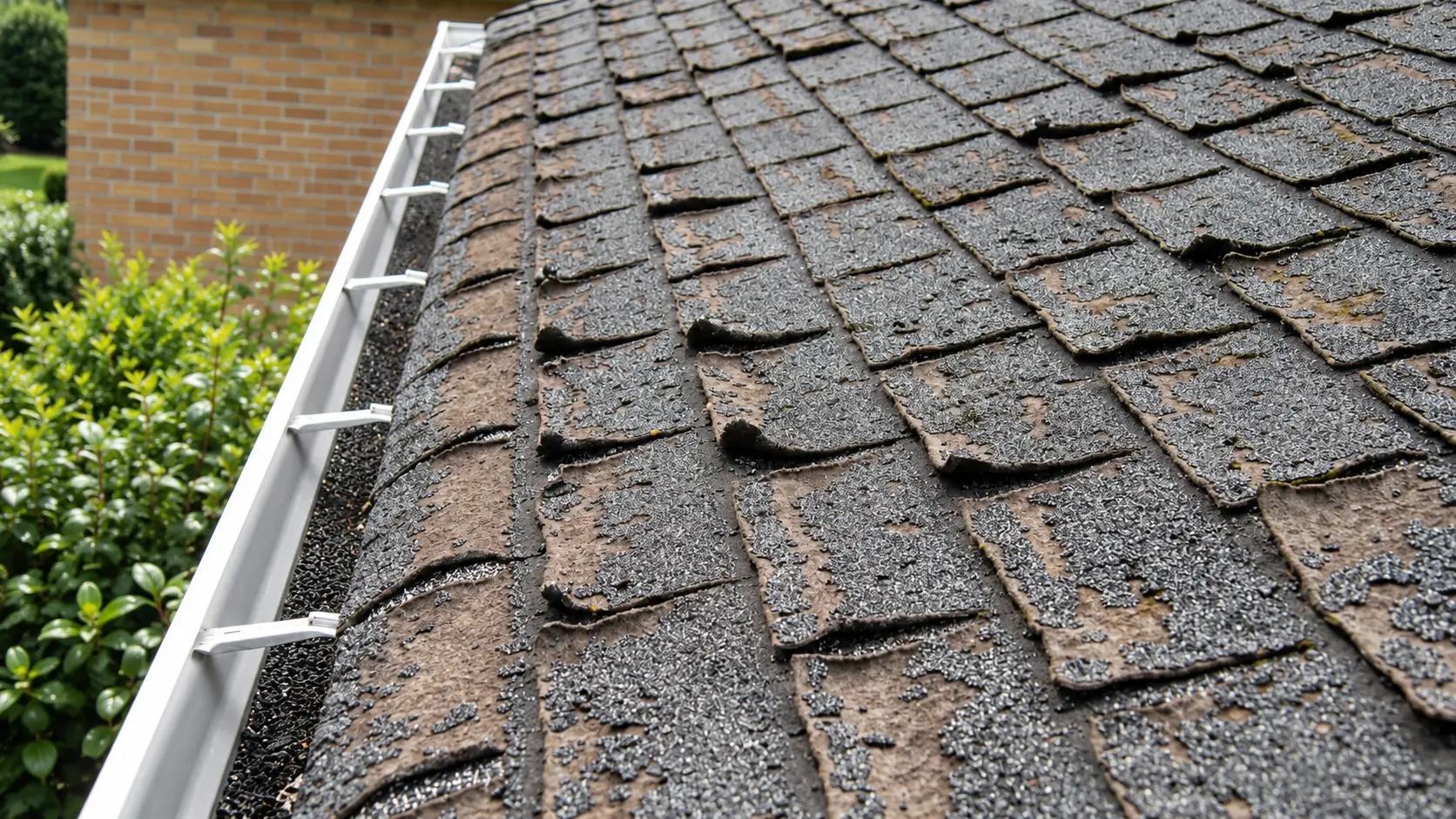
A roof that’s showing several of the following signs at once is a real risk of failing partway through winter: curling, cracking, or missing shingles across more than one area, granules collecting heavily in the gutters, soft or spongy spots when walked on, daylight visible through the attic roof boards, or an older roof that’s never had major repair work done. No single sign guarantees failure on its own, but two or three together are worth a professional look before the first real cold snap.
What Shingle Condition Tells You
Shingles curl and crack as the asphalt dries out and loses flexibility with age and sun exposure. A few curled shingles after a bad storm can be a normal, isolated repair. Curling or cracking spread across multiple slopes of the roof, or shingles that are visibly missing in more than one spot, points to a roof nearing the end of its useful life rather than storm damage in one location. Granules in the gutters are part of the same story: shingles are coated with granules that protect the asphalt underneath from UV damage, and a roof shedding a noticeable amount of them has less protection left than it used to.
What the Attic Can Tell You That the Roof Can’t
Some of the clearest warning signs aren’t visible from the ground. From inside the attic, look for daylight coming through the roof boards, dark water stains on the rafters or sheathing, or a musty smell that suggests moisture has been getting in for a while. Walking the roof itself, or having a professional do it, can reveal soft or spongy spots where the decking underneath has started to deteriorate. Any of these usually means water has already found a way in, even if there’s no visible leak inside the house yet.
Age Matters, Even Without Obvious Damage
Asphalt shingle roofs commonly run somewhere in the 20 to 30 year range depending on the material, the quality of the original installation, and how much ventilation the attic gets. A roof at or past that range is statistically more likely to have several small problems developing at once, even if it still looks fine from the driveway. That’s a different situation from a roof with isolated storm damage, and it usually calls for a different conversation about repair versus replacement.
Repair or Replace?
If you’re seeing one or two of these signs, a repair might genuinely be the right call. If you’re seeing several together, or the roof is already past its expected service life, replacement is usually the more honest recommendation, even though it’s the bigger project. We’ve written more on how to think through that decision here: Repair or Replace? How to Decide on Your Roof.
Get a Straight Answer Before Winter
We’ll come out, look at what’s actually going on, and tell you honestly whether repair or replacement makes sense, before winter makes that decision harder and more expensive. Contact us to schedule an evaluation.
